Feature Request: Waze “Bike Presence” Safety Layer
Overview
Introduce Bike Presence, a lightweight, opt-in safety layer within the Waze ecosystem designed to bridge the visibility gap between drivers and vulnerable cyclists. Unlike a dedicated cycling navigation app, Bike Presence leverages Waze’s existing driver network to provide real-time proximity alerts for shared-road encounters without requiring cyclists to navigate using the app.
Problem Statement
Cyclists are among the most vulnerable road users. A primary root cause of collisions is delayed visual acquisition by drivers—drivers often notice cyclists too late, particularly on winding roads, blind curves, or during low-visibility conditions. Existing solutions either focus on turn-by-turn cycling navigation (which cyclists prefer not to use for driving apps) or require expensive proprietary hardware.
Proposed Solution & User Flows
1. The Cyclist Experience (The Broadcaster)
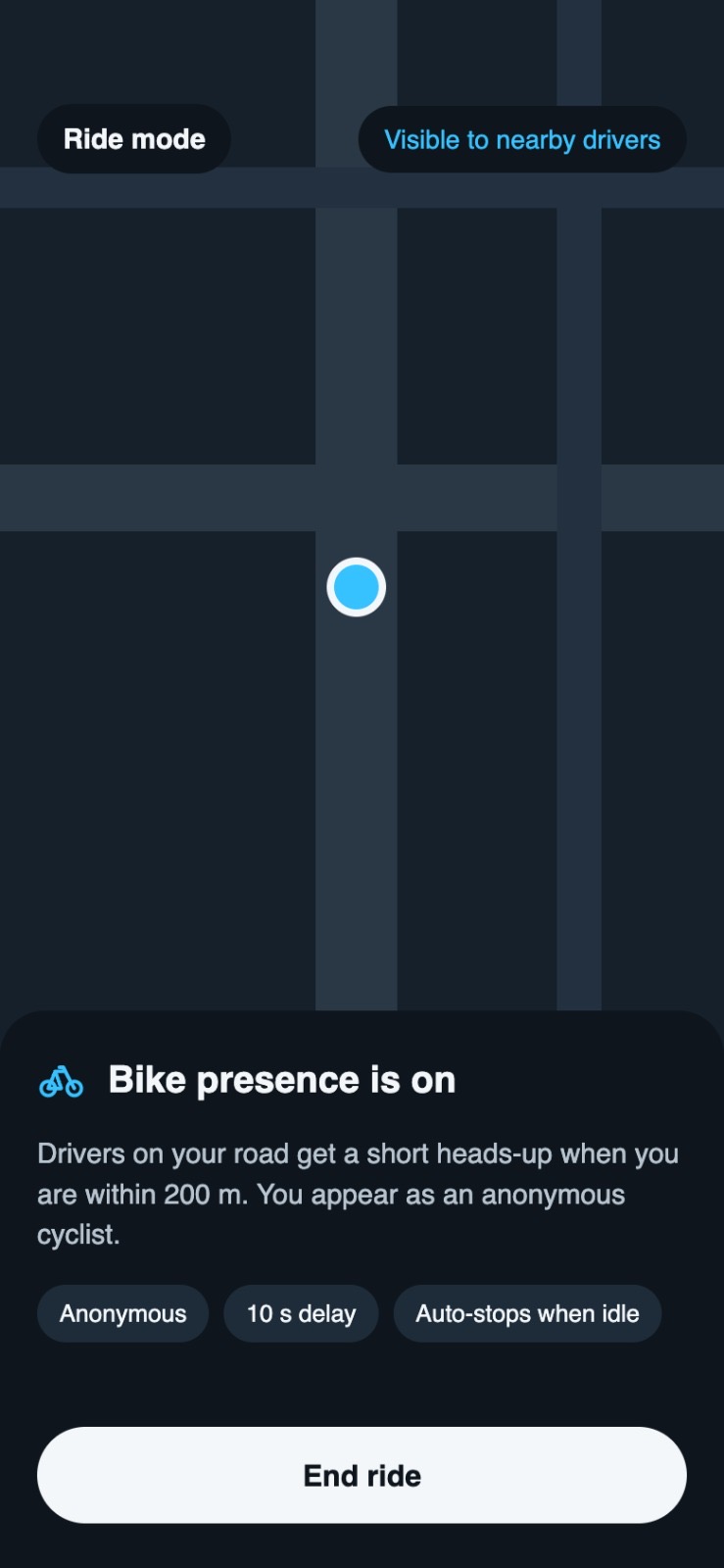
Action: The cyclist opens Waze (or a companion quick-toggle widget) and taps “I’m riding”.
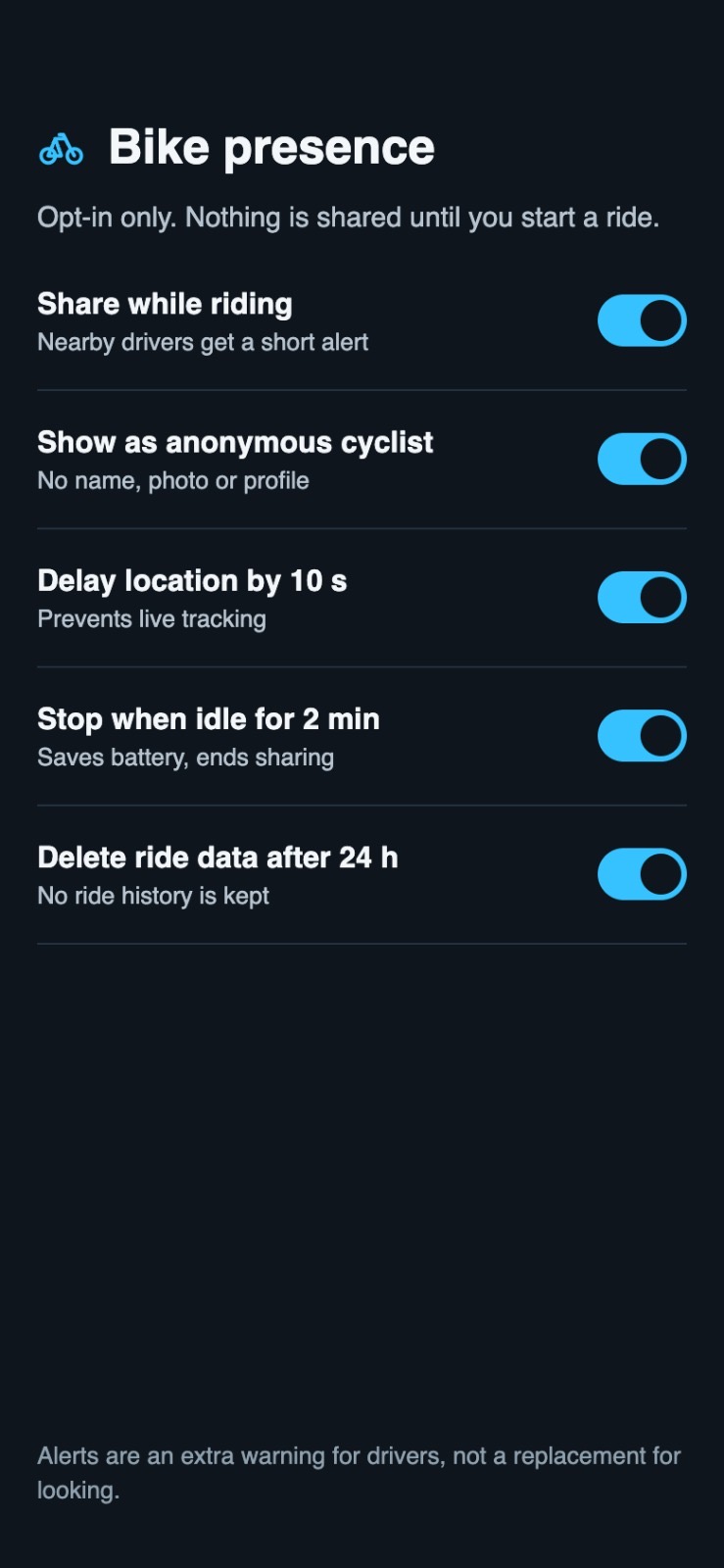
Privacy & Safety Protections:
Opt-in only.
Anonymous broadcasting.
Location Delay: Telemetry is delayed by 10 seconds to eliminate real-time tracking risks.
Lifecycle: Sharing stops automatically when the ride ends, movement ceases, or the phone goes idle, preventing battery drain and ghost-tracking.
2. The Driver Experience (The Receiver)
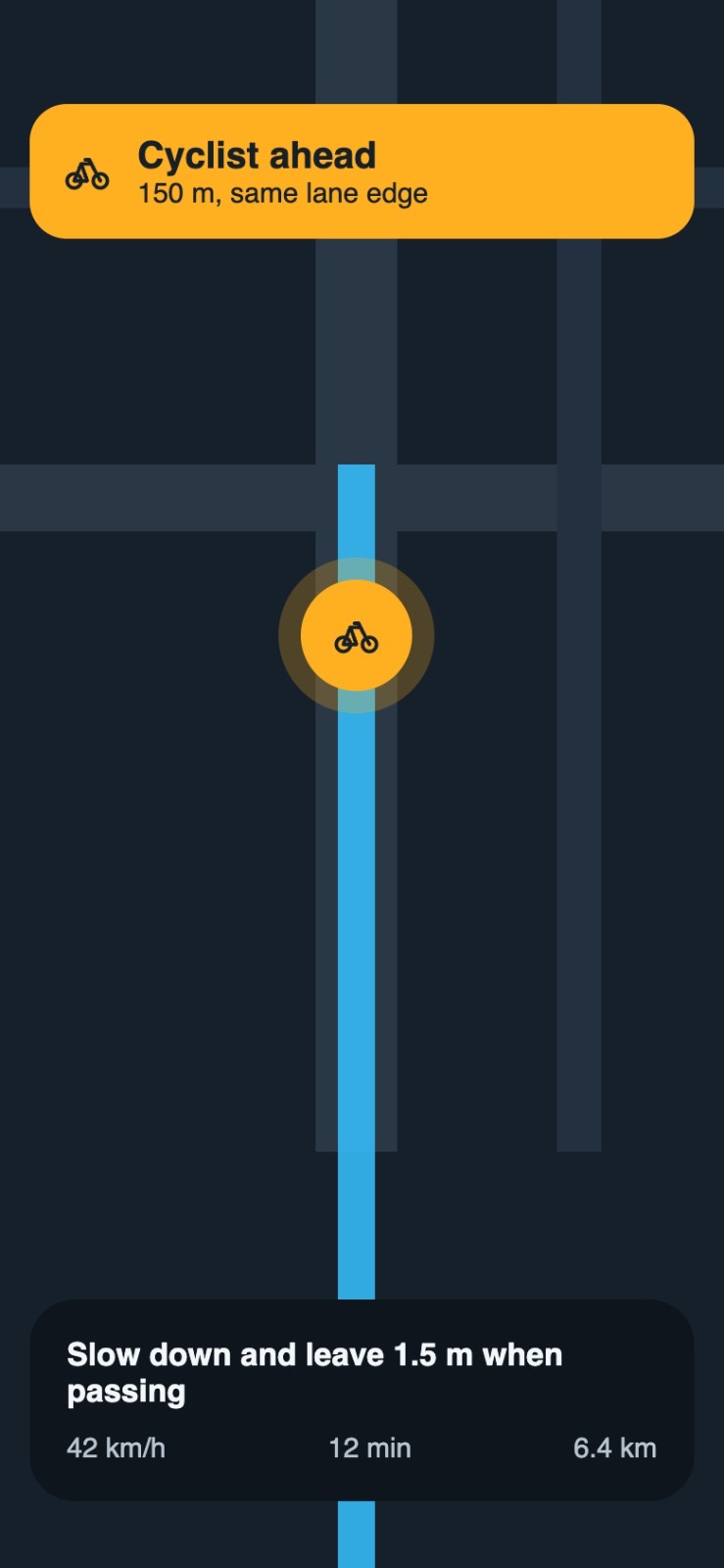
Action: When a driver approaches an active cyclist on the same road segment, Waze triggers a standardized, non-intrusive audio-visual cue.
Alert Format:
Visual: Glanceable banner reading: "Cyclist ahead, 150 m. Leave 1.5 m when passing."
Audio: A subtle, distinct chime (similar to existing Waze hazard alerts, but unique to vulnerable road users).
Strategic Fit for Waze
Synergy with Motorcycle Mode: Waze has already proven its capability to serve two-wheelers via Motorcycle Mode.
Leveraging Community DNA: The Waze community is built on crowdsourced hazard reporting and safety sharing. Extending this ethos to protect vulnerable road users aligns with modern urban safety initiatives and corporate responsibility goals.
Non-Competitive Positioning: By acting strictly as a safety layer rather than a routing engine, it avoids competing with dedicated cycling apps while adding massive utility to the driver experience.
Technical & Product Considerations (Mitigations)
Cold Start / Adoption: Bootstrap initial density via municipal partnerships, cycling clubs, or commuter corridors, combined with passive heat-mapping on frequent routes.
Driver Alert Fatigue: Implement intelligent geofence throttling (e.g., triggering only once per road segment per driver when closing speeds demand attention; suppressing alerts entirely in dense traffic gridlock where bikes are ubiquitous).
Protected Infrastructure Filtering: Use map data to suppress alerts when a cyclist is physically separated from car traffic by protected bike lanes, reserving alerts strictly for unbuffered shared asphalt.