Following methods will be adopted in mapping all types of Permanent Hazards in India.
Speed Breakers
All speed breakers need to be mapped if they exist on the actual road.
India has many marked and unmarked speed breakers so the following mapping patterns will be used.
Level 3 and above editors can map speed bumps. Other editors may create map notes (formerly called comments) on the map and notify senior editors to mark them. When such notes are used, after mapping the note should be set to expire a week after the mapping date so map remans clean and the reporting editor has 7 days to review and suggest changes like minor adjustments or destructive toggle on/off.
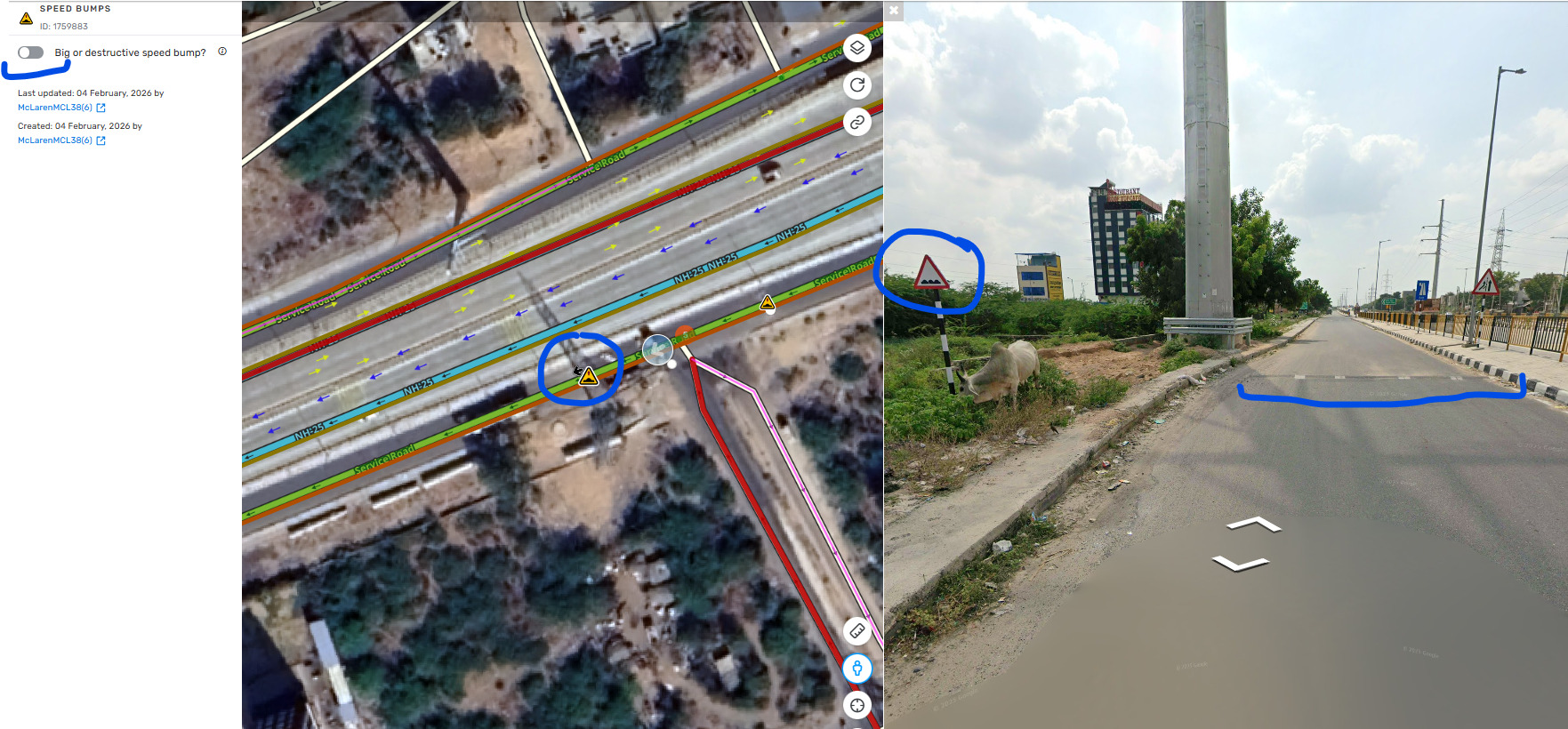
Single speed bump with the following features:
Painted in full or across + road sign showing the presence of a speed breaker
→ Mark as speed bump with big/destructive toggled off
Rumble strip or high speed bump with the following features:
Painted or unmarked + no road sign + more than 2 rumbles
OR
No road sign + same colour as the road + rural area without lights at night
→ Mark as speed bump with big/destructive toggled on
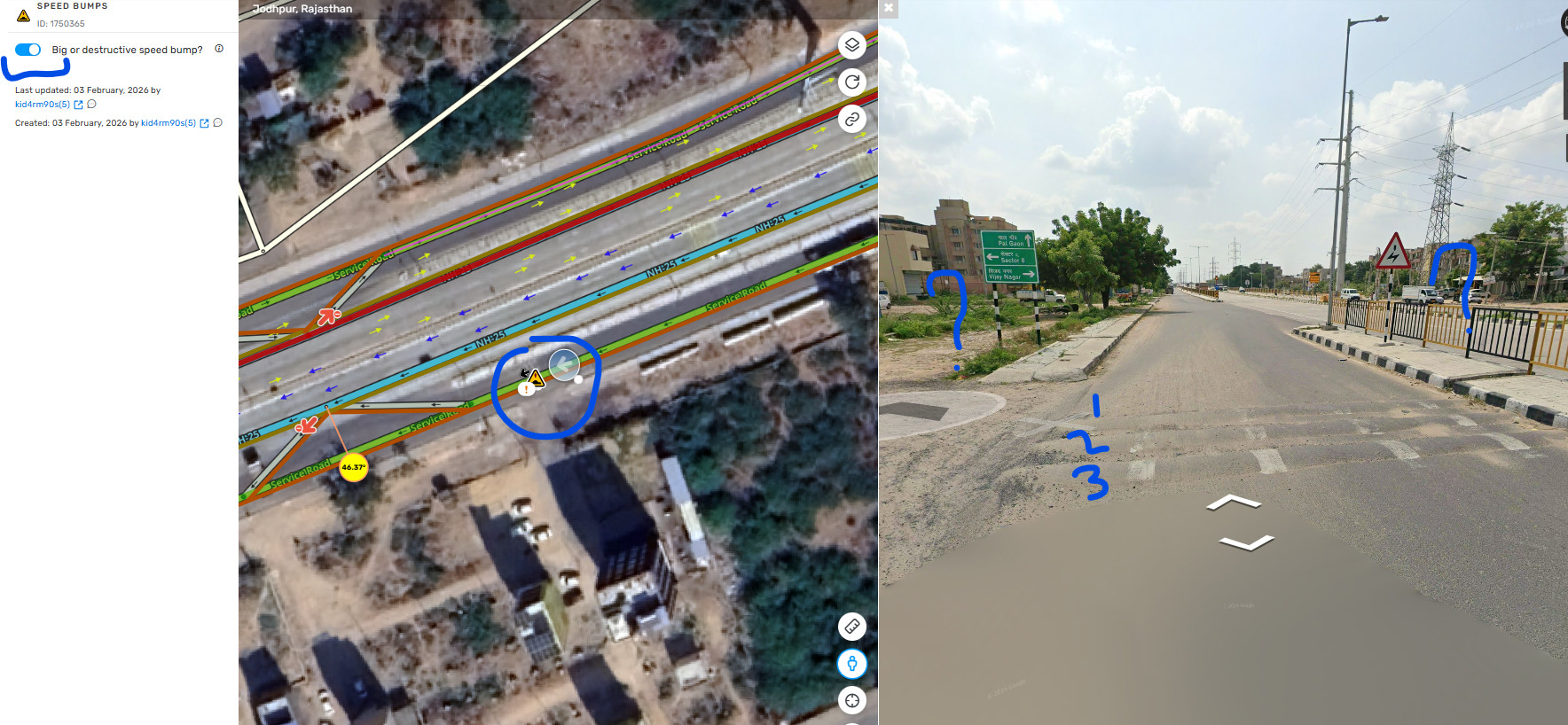
The height of rumble strips is considerably higher than the global standards. This may damage the vehicle.
Turning on the toggle will ALWAYS alert the driver of the speed bump.
Training video for Speed Breakers
New alert systems being developed by Waze do take these into account so when you’re unsure of how to mark the big/destructive toggle always check with the India coordinators.