Template of topic 380525, post 1
Template of topic 380019, post 1
Mapping a speed bump
A speed bump suitable for mapping is identified as:
- A speed bump/hump or sharp dip intended for the purpose of speed reduction
- Cattle or stock grids in regional and remote Australia
- Cover the entire or partial width of the road or lane
- Where the speed limit is 50km/hr or higher. Ignore school or variable time-based speed limits.
- Note: Where the speed limit is missing from the segment, the correct speed should be added. If the limit can not be ascertained, don’t add until it can be.
Like all permanent hazards, speed bumps must only be mapped on public roads.
Template of topic 380209, post 14
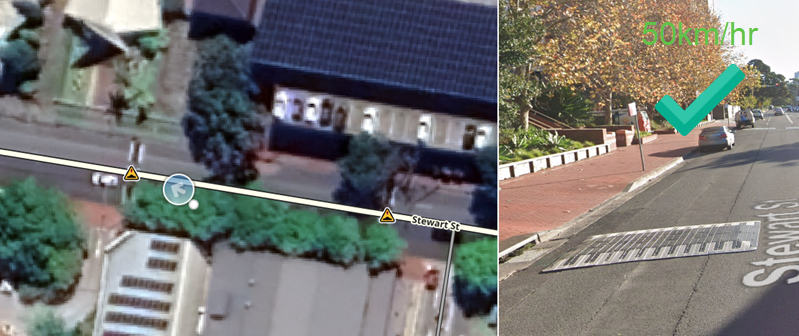
A standard speed bump/hump in a 50km/hr speed zone is suitable for a permanent hazard to be mapped.]
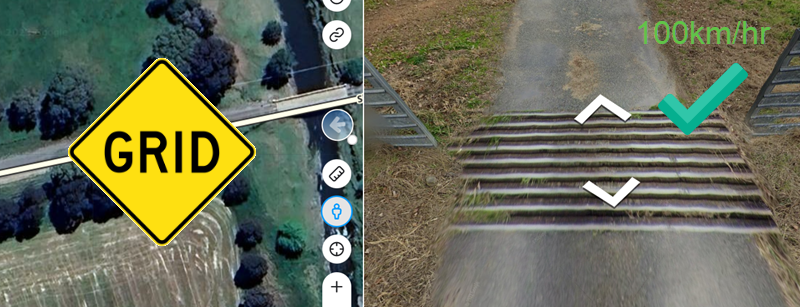
A stock grid in a 100km/hr speed zone is suitable for a permanent hazard to be mapped.
Raised intersections
A raised intersection suitable for mapping is identified as:
- The centre of the intersection is raised creating a speed bump effect at each entry to the intersection;
- May or may not have pedestrian crossings entering the raised intersection (always map these as speed bumps).
- The speed limit is 50km/hr or higher. Ignore school or variable time based speed limits.
- Note: Where the speed limit is missing from the segment, the correct speed should be added. If the limit can not be ascertained don’t add until it can be.
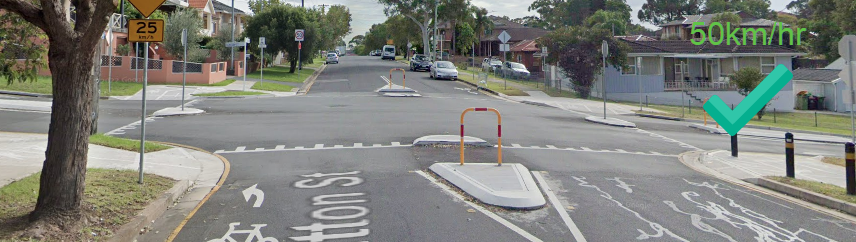
A raised intersection in a 50km/hr speed zone is suitable for a permanent hazard to be mapped.
Zone with an entry speed bump
A shared traffic zone or similar, with entry speed bump, suitable for mapping is identified as:
- a sign posted “Shared Zone” or similar with slow speed limits, and
- there is a speed bump or raised road at the entry boundary of the zone, give or take 10 metres of the boundary, and
- the speed preceding is 50km/hr or higher. Ignore school or variable time based speed limits.
- Note: Where the speed limit is missing from the segment, the correct speed should be added. If the limit can not be ascertained don’t add until it can be.
Note: Subsequent speed bumps where the speed limit is less than 50km/hr should not be mapped, including the zone exit/final speed bump.
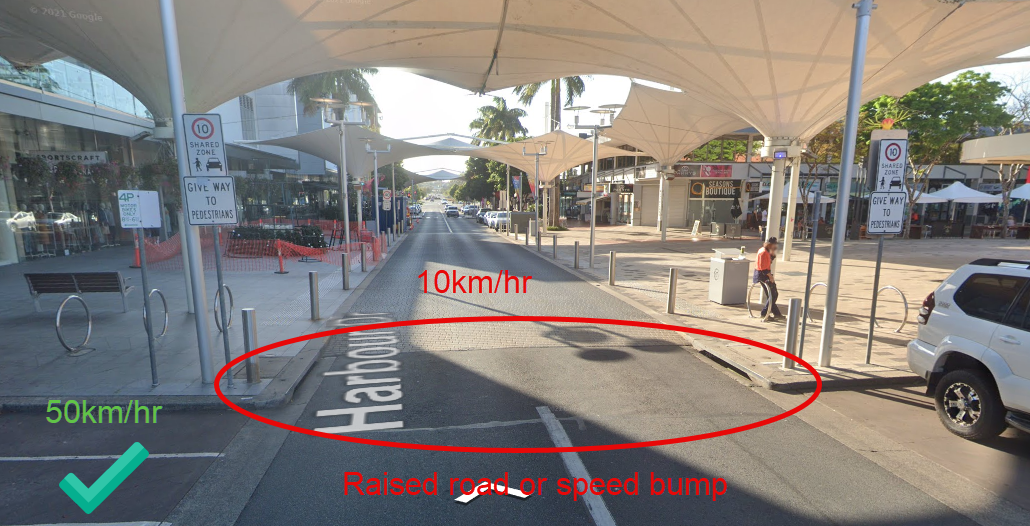
A raised intersection on the boundary of a shared traffic zone, where it was 50km/hr speed zone prior.
Speed bump exceptions
- Where there are multiple speed bumps within a distance of 1 metre from the other, only a single speed bump should be mapped.
- Note that “big and destructive speed bumps”, or topes, are not used in Australia.
- A speed bump should never be mapped where the road guttering continues across the intersection to form a dip.
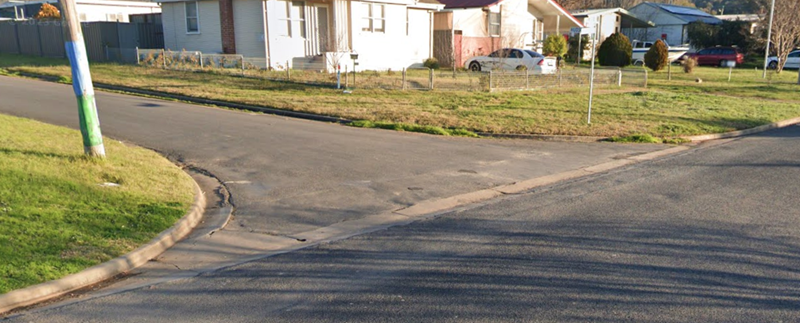
Not a speed bump/hump/dip suitable for mapping.